Facebook ads vs google ads: which actually works better for your business? Next Brand IT compares real 2026 cost data and roi.

Facebook ads vs google ads: which actually works better for your business? Next Brand IT compares real 2026 cost data and roi.
“How much does SEO cost?” Ask five agencies and you’ll probably get five different numbers — $500, $1,500, $3,000, $8,000, sometimes more. It’s not that four of them are lying. It’s that “SEO” can mean a dozen different things depending on who’s selling it, and nobody bothers explaining what’s actually behind the number.
We’re not going to do that to you here. This guide pulls from real 2026 industry pricing surveys — not guesswork — and breaks the numbers down by business size, service scope, and country, so you walk away with an actual budget range instead of more confusion.
Quick answer: Most small businesses pay between $750 and $3,000 USD per month for SEO in 2026, with the industry-wide average sitting closer to $2,900–$3,200/month once agencies of every size are factored in. Local, low-competition SEO tends to land at the lower end; national or highly competitive campaigns push well past $5,000/month.
Let’s get the number out of the way first, because that’s what you actually came here for.
Across a 2026 survey of 439 SEO providers, the average cost of SEO sits around $2,917 a month — agencies alone average closer to $3,209/month, while freelancers come in lower at around $1,348/month. But averages are misleading here, because they blend tiny freelance setups with $15,000/month enterprise campaigns into one number. A separate 2026 survey found a very different picture: roughly 64% of agencies actually charge under $1,000 a month, which tells you the market is far more split between “budget” and “premium” than a single average suggests.
The number that matters more for most small businesses: $750–$3,000 a month is where a legitimate, results-focused SEO package typically lands, according to multiple 2026 pricing surveys. Anything significantly below that range is worth questioning — not because cheap SEO is impossible, but because it usually means very limited scope, not a bargain.
A handful of factors explain almost all of the spread between a $750/month quote and an $8,000/month quote:
Before comparing numbers, it helps to understand how SEO is actually sold — because the “seo cost per month” question assumes a monthly retainer, but that’s only one of three common models.
| Pricing Model | How It Works | Best For |
| Monthly Retainer | Fixed monthly fee for ongoing work (technical SEO, content, link building, reporting) | Businesses treating SEO as a core, ongoing growth channel |
| Project-Based | One-time fee for a defined deliverable (site migration, technical audit, content overhaul) | Businesses needing a specific fix, not ongoing management |
| Hourly Consulting | Pay per hour for strategy or advisory work | Businesses with an in-house team that needs occasional expert guidance |
Monthly retainers are by far the most common model for small businesses, and for good reason: SEO is a compounding investment. Rankings built over six consistent months rarely come from a single one-off project — they come from steady, ongoing execution. Most agencies will tell you the same thing we tell our clients: budget for at least 6 months before expecting meaningful traction, regardless of which pricing model you choose.
“Small business seo packages” usually get sold in tiers, and understanding what’s actually inside each tier matters more than the price tag alone.
A package priced under $500/month almost never includes all six of these — it’s usually limited to basic on-page tweaks and light reporting, with content and link building excluded or billed separately. That’s not automatically a bad deal, but it needs to match what you actually need. A local service business with low competition might genuinely be fine with a lighter package; a business trying to rank nationally almost certainly isn’t.
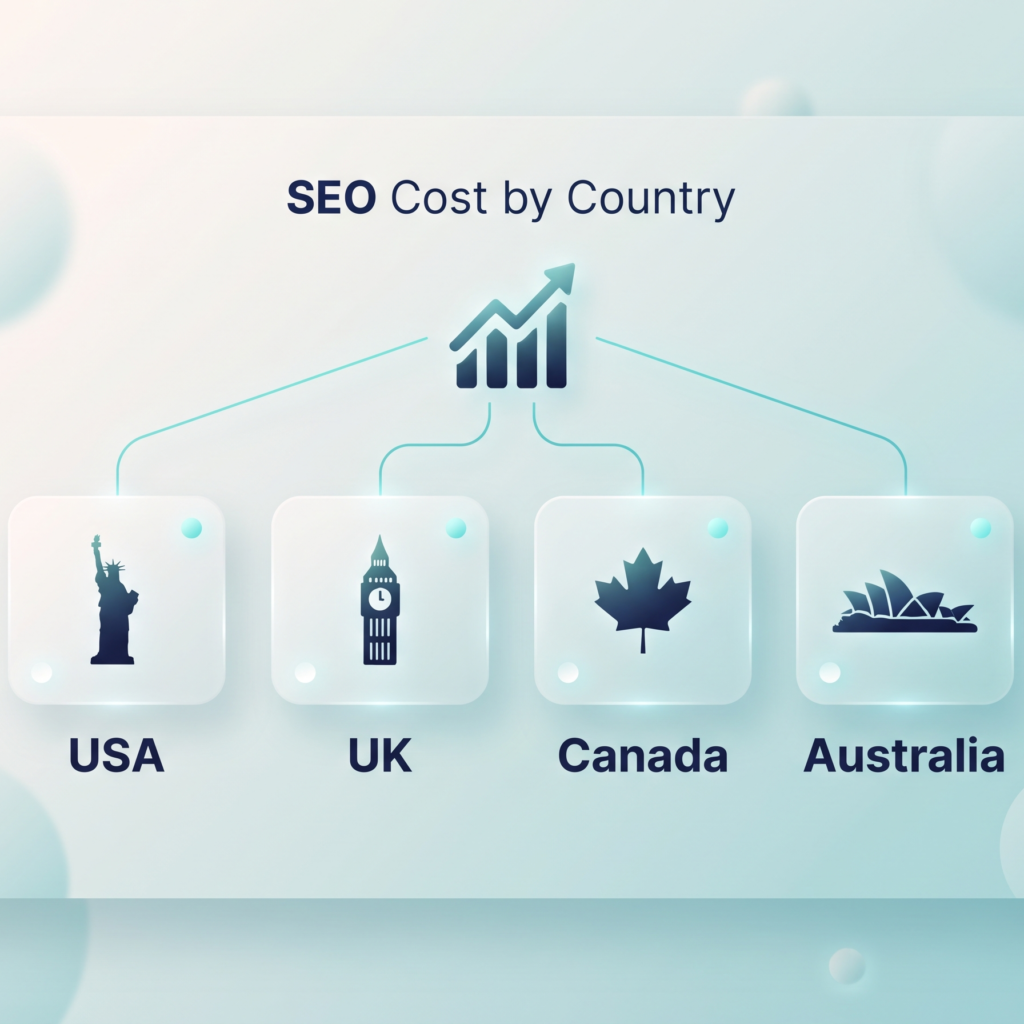
Pricing shifts meaningfully depending on which market you’re in — competition level, average business size, and typical agency overhead all vary by country.
The US has the most competitive SEO market of the four, which shows in the numbers: small businesses typically budget $1,500–$3,000/month for real movement, while local, low-competition campaigns can start around $500–$1,500/month. National or highly competitive campaigns frequently run $3,000–$10,000+/month, with local SEO specifically averaging around $1,557/month versus $3,474/month for national campaigns.
UK SEO pricing tends to track slightly below equivalent US pricing once converted, largely due to a smaller, more geographically concentrated market. Small businesses typically budget £600–£2,500/month, with national campaigns in competitive industries (finance, legal, insurance) running higher.
Canadian SEO pricing sits close to US pricing, generally landing around $1,000–$3,500 CAD/month for small to mid-sized businesses. Bilingual campaigns (English/French, particularly for businesses targeting Quebec) typically cost more, since content and keyword research effectively need to be done twice.
Australian SEO pricing generally runs $1,200–$4,000 AUD/month for small businesses, with local, city-based campaigns at the lower end and national campaigns higher. Agencies working across time zones — including international providers like Next Brand IT — can often offer competitive pricing without sacrificing communication quality.
| Country | Small Business Range (Monthly) | National/Competitive Range |
| USA | $1,500 – $3,000 USD | $3,000 – $10,000+ USD |
| UK | £600 – £2,500 GBP | £2,500 – £8,000+ GBP |
| Canada | $1,000 – $3,500 CAD | $3,500 – $10,000+ CAD |
| Australia | $1,200 – $4,000 AUD | $4,000 – $12,000+ AUD |
Beyond the headline monthly number, a few line items tend to catch businesses off guard after they’ve already signed a contract. Worth asking about upfront:
Content production fees. Some agencies quote a low base retainer, then bill content creation separately — a blog post or landing page can add $150–$500 per piece on top of the “package” price. If content is central to your strategy (and for most businesses, it should be), ask whether it’s included or itemized separately before comparing quotes.How to Choose the Best SEO Agency for Your Budget
Link building add-ons. Link building is one of the most labor-intensive parts of SEO, and it’s also one of the first things cut from budget packages. Some providers charge per-link or per-outreach-campaign on top of the base retainer — worth clarifying exactly how many links per month, if any, are included.
Technical SEO audits and fixes. A one-time technical audit is sometimes priced separately from ongoing monthly work, particularly for older websites with accumulated technical debt. If your site hasn’t had SEO work done before, budget for this as a likely upfront cost rather than assuming it’s bundled in.
Tool and software costs. Some smaller providers pass along the cost of SEO tools (rank tracking, keyword research platforms, technical auditing software) as a separate line item. Larger agencies typically absorb this into their retainer, but it’s worth a direct question.
AI search optimization (GEO/AEO). This is a newer cost category in 2026 — optimizing content so it gets surfaced correctly inside AI Overviews, ChatGPT, and other answer engines. Many agencies now charge for this separately, averaging around $900+/month on top of traditional SEO, since it requires a different content structure and technical approach than classic search optimization.
None of these are red flags on their own — separately itemized pricing can actually be more transparent than an all-in-one number that hides how the budget is allocated. The goal is simply knowing what you’re paying for before the invoice arrives, not after.
Finding the best seo agency isn’t about finding the cheapest one — it’s about finding the one whose pricing matches their scope, and whose scope matches your actual goals.
The honest answer: it’s rarely about the number itself, and almost always about what’s excluded at a lower price point.
A $300/month package and a $3,000/month package aren’t the same service at different prices — they’re usually different services entirely. The cheaper option typically skips content creation, does minimal or no link building, and relies on basic on-page tweaks that plateau quickly. The more expensive option usually includes ongoing content, deliberate link building, and technical work that compounds over time.
That doesn’t mean the most expensive agency automatically wins, either. Enterprise-priced agencies sometimes carry overhead that has little to do with your specific results. The real question isn’t “cheap or expensive” — it’s whether the scope of work matches your competitive reality. A local business with light competition can genuinely succeed with a modest budget. A business trying to outrank national competitors on a $400/month package is set up to be disappointed no matter how good the agency is.
Is SEO Worth the Investment?
For most businesses, yes — and the ROI math is a big part of why. Digital marketing broadly returns roughly $5 for every $1 spent on average, and SEO specifically tends to compound in a way paid ads don’t: once a page ranks well, it keeps generating traffic without an ongoing per-click cost, unlike Google Ads or Meta Ads, where traffic stops the moment the budget does.
The trade-off is time. SEO isn’t a same-week result — most businesses need 4–6 months before seeing meaningful ranking movement, and longer in competitive industries. Businesses that need leads immediately often run paid ads alongside SEO in the early months, then shift budget toward organic as rankings mature.
| Timeframe | SEO Cost & Result | Paid Ads Cost & Result |
| Month 1–3 | Ongoing monthly cost, minimal traffic yet | Ongoing spend, immediate traffic while budget runs |
| Month 4–6 | Rankings start climbing, organic traffic begins | Same spend required to maintain traffic |
| Month 7–12 | Traffic compounds, often surpassing early ad traffic at lower marginal cost | Traffic remains flat relative to spend; stops entirely if budget pauses |
| Year 2+ | Continued organic traffic, often at a lower cost-per-lead than any paid channel | Cost-per-lead stays roughly constant; total spend keeps climbing |
This is the core argument for treating SEO as a long-term budget line rather than a short-term campaign: the businesses that stop and restart SEO every few months rarely see the compounding effect that makes the investment worthwhile in the first place. Consistency matters more than raw budget size — a modest, steady $1,000/month for 12 months typically outperforms a $5,000/month burst that gets cancelled after two.
At Next Brand IT, we price SEO the way we’d want it priced if we were the ones buying it: transparent scope, no hidden fees, and packages that actually match what a small or mid-sized business needs to compete — not an inflated enterprise rate card applied to every client regardless of size.
What that looks like in practice:
Want a real number instead of a range? Get a free, custom SEO quote from Next Brand IT based on your industry, market, and goals — no generic package, no pressure.
Most small businesses pay between $750 and $3,000 USD per month for a legitimate SEO package, with the broader industry average sitting around $2,900–$3,200/month once larger agencies are factored in. Local, low-competition campaigns tend to land at the lower end of that range.
For most small businesses, yes. Digital marketing returns an average of roughly $5 for every $1 spent, and unlike paid ads, SEO traffic continues after the initial investment rather than stopping the moment a budget runs out.
Industry competitiveness, geographic targeting scope, content requirements, provider experience level, and exactly what’s included (technical SEO, content, link building, reporting) all affect the final price.
It depends on your competitive landscape. A local business with light competition can succeed with a modest budget. A business trying to compete nationally on a very low budget is usually paying for a scope of work too limited to produce meaningful results.
Most ongoing SEO work is billed as a monthly retainer, since SEO requires consistent execution over time. Hourly billing is more common for advisory or consulting work, and project-based pricing is typically used for one-time deliverables like a technical audit or site migration.
As a starting point, budget $750–$3,000/month if you’re a small business in the US, UK, Canada, or Australia, and expect the number to rise with industry competitiveness or if you’re targeting more than one country at once.
There’s no single honest answer to “how much does SEO cost” — but there is an honest range, and now you have it. What matters more than the exact number is matching the scope of work to your actual competitive situation, and working with a provider who explains clearly what that number includes.
If you’d rather skip the ranges and get an actual quote for your business, talk to Next Brand IT — we’ll walk you through pricing based on your market and goals, not a generic rate card.

If you’ve ever typed “local seo vs international seo” into Google trying to figure out which one your business actually needs, you’re not alone. It’s one of the most common questions business owners ask when they start taking search visibility seriously — and honestly, it’s a fair question. The two approaches share the same end goal (getting found on Google), but the strategies, tools, and even the mindset behind them are quite different.
Maybe you run a single-location dental clinic in Manchester. Or maybe you’re scaling an e-commerce brand that ships to the US, UK, Canada, and Australia all at once. Either way, picking the wrong SEO approach can waste months of effort and budget chasing rankings that don’t actually move your business forward.
In this guide, we’ll break down what local SEO and international SEO actually mean, how they differ, and — most importantly — how to figure out which one (or both) your business needs right now. By the end, you’ll have a clear picture, plus practical checklists you can start using today.
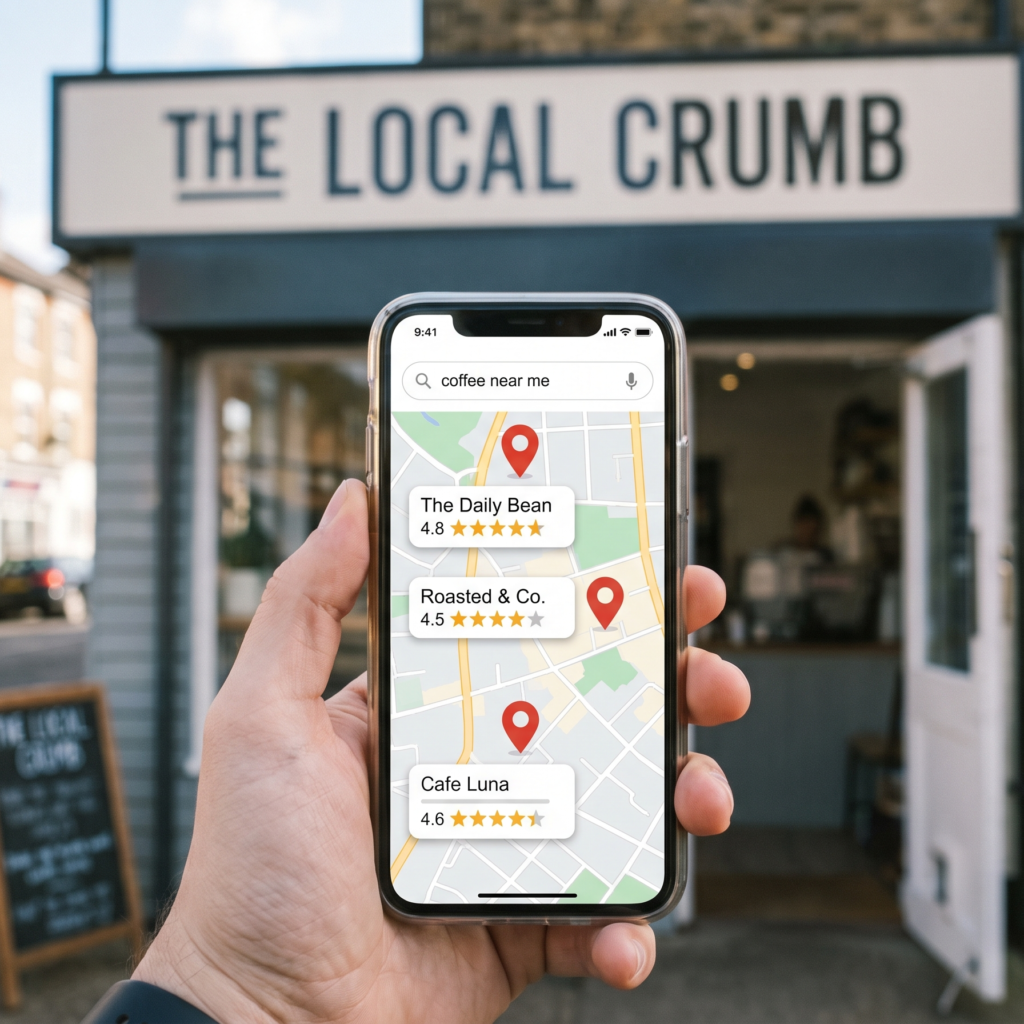
Local SEO is the practice of optimizing your online presence so your business shows up when people search for products or services near a specific location — usually a city, town, or region. Think “plumber near me,” “best coffee shop in Leeds,” or “dentist in Toronto.” Google uses signals like your business address, customer reviews, and local citations to decide who deserves to show up in that map pack and those local results.
Unlike broader SEO efforts, local SEO isn’t really about competing on a national or global scale. It’s about being the obvious, trusted choice for people who are physically close to you or who need a service delivered in your area.
Local SEO is essential for any business that depends on foot traffic or serves customers within a defined geographic area. Some clear examples include:
Basically, if a customer needs to physically visit you, or you need to physically go to them, local SEO should be at the center of your strategy.
International SEO, on the other hand, is about making your website visible and relevant to audiences across multiple countries or language markets. It’s not just about ranking — it’s about making sure Google understands which version of your site to show to which audience, and that your content actually resonates with each market’s language, currency, and search habits.
This involves technical elements like hreflang tags, country-specific URL structures, and localized content — plus a strategic approach to keyword research that accounts for how people search differently across regions, even when they’re speaking the same language.
International SEO becomes necessary once your business operations, sales, or audience cross national borders. Common examples include:
If your growth plan involves reaching customers outside your home country, international SEO isn’t optional — it’s the foundation that makes that expansion actually work in search.
When people compare local seo vs global seo, the confusion usually comes from thinking they’re just “smaller” and “bigger” versions of the same thing. In reality, they solve different problems and require different toolkits entirely.
Local SEO is built around proximity and trust signals within one market. Global (international) SEO is built around technical infrastructure and content strategy that scales across markets. One is about depth in a single location; the other is about breadth across many.
| Factor | Local SEO | International SEO |
| Targeting Scope | Single city, region, or metro area | Multiple countries or language markets |
| Technical Setup | Google Business Profile, local schema markup | Hreflang tags, ccTLD/subdirectory structure, geotargeting in Search Console |
| Content Strategy | Location-specific pages, local keywords | Country-specific content, currency & language localization |
| Link Building | Local citations, local news, community partnerships | Region-based backlinks, international PR, market-specific outreach |
| Cost | Generally lower — narrower scope | Higher — more markets, more content, more technical work |
| Timeline to Results | Often faster (weeks to a few months) | Longer (several months per market, sometimes longer) |
The takeaway: local SEO tends to be more contained and quicker to show movement, while international SEO is a bigger, longer-term investment that pays off through wider market reach.
A strong local seo strategy is built on a handful of core pillars that work together to build trust with both Google and local customers.
Google Business Profile Optimization Your Google Business Profile (formerly Google My Business) is arguably the single most important local ranking factor. Complete every field — categories, hours, services, photos — and keep it updated. An incomplete or outdated profile signals low trust to both Google and potential customers.
Local Citations Citations are mentions of your business name, address, and phone number (NAP) across directories like Yelp, Yellow Pages, and industry-specific listings. Consistency across all of these builds credibility and helps Google confirm your business is legitimate and active.
Location-Based Keywords Instead of just targeting broad terms like “accountant,” local businesses need to target phrases like “small business accountant in Bristol” or “tax advisor near [neighborhood].” These location-modified keywords match how people actually search when they want something nearby.
Reviews Management Customer reviews influence both rankings and conversion rates. Actively encouraging reviews — and responding to them, positive or negative — shows Google (and future customers) that your business is engaged and trustworthy.
Together, these elements create a local footprint that’s hard for competitors to outrank, especially when maintained consistently over time.
If you want a practical starting point, here’s a local seo checklist you can work through step by step:
Working through this checklist consistently — not just once — is what separates businesses that dominate local search from those that plateau after initial setup.
For businesses expanding across borders, here’s an international seo checklist to guide the technical and strategic setup:
Skipping the technical foundation — especially hreflang and URL structure — is the most common reason international SEO campaigns underperform, even when the content itself is solid.

SEO isn’t one-size-fits-all, even within what looks like a single “market.” Here’s how local vs international SEO plays out differently across four key regions.
The US is large enough that “local” often means state or even city-specific targeting rather than treating the whole country as one market. A business operating in multiple states can face challenges that resemble international SEO — different competitors, different search behavior, and sometimes different regulations — even though it’s technically one country.
Being a smaller, more geographically compact country makes local SEO relatively straightforward for UK businesses. However, once a business looks to expand into the EU or Ireland, it starts needing international SEO practices — different currencies, VAT considerations, and language nuances come into play even with English-speaking neighbors like Ireland.
Canada adds a unique layer: bilingual considerations. Serving English and French-speaking audiences within the same country requires a strategy that’s closer to “mini-international” SEO — separate content, careful hreflang setup between en-CA and fr-CA, and distinct keyword research for each language segment.
Australia’s vast geography paired with lower population density means city-based local SEO remains a strong strategy for most businesses — Sydney, Melbourne, and Brisbane function almost like separate markets. But businesses looking to expand into New Zealand will need to start applying international SEO principles, despite the geographic and cultural closeness.
Yes — and for many growing businesses, a hybrid approach is exactly the right move. A business might maintain strong local SEO for its physical stores or service areas in the US while simultaneously building out international SEO to support expansion into the UK or Canada.
The key is not treating these as competing priorities, but as complementary layers of the same overall visibility strategy. Local SEO protects and strengthens your home turf, while international SEO opens doors to new markets — and done well, they can even reinforce each other through shared brand authority and cross-market backlinks.
At Next Brand IT, we regularly manage both sides of this equation for clients — running focused local campaigns for physical locations while building out the technical and content infrastructure needed for international growth, all under one coordinated strategy rather than two disconnected efforts.
If you’re still unsure, here’s a simple framework to help you decide:
This isn’t always a permanent decision, either. Many businesses start local and grow into international SEO as they expand — the important thing is recognizing where you are right now so you’re not investing in the wrong strategy too early, or missing the moment when it’s time to expand.
Whether your business needs sharp local visibility, a full international SEO rollout, or both running side by side, Next Brand IT builds strategies around where your business actually is — not a generic template. We offer flexible packages for local businesses just getting serious about search, as well as comprehensive international SEO services for companies ready to scale across the US, UK, Canada, Australia, and beyond.
Not Sure Which One You Need? Get a Free SEO Consultation — our team will assess your current setup and recommend the right path forward, with no pressure and no guesswork.
Local SEO focuses on ranking within a specific city or region, relying on signals like Google Business Profile and local citations. International SEO focuses on ranking across multiple countries, relying on technical setup like hreflang tags and country-specific content.
It depends on how you serve customers. If you rely on a physical location or serve a specific area, local SEO is essential. If you sell to or serve customers in multiple countries, international SEO is the priority.
Yes. Many businesses run a hybrid strategy — maintaining strong local visibility in their home market while building out international SEO for expansion into new countries.
International SEO generally requires a larger investment due to the added technical work, multi-market content creation, and region-specific link building involved. Local SEO tends to be more affordable since it targets a single area.
Signs of readiness include existing demand from international customers, plans to ship or operate in new countries, and the resources to create localized content and manage multi-region technical SEO.
For most small businesses serving a single city or region, yes — a strong local SEO strategy is often enough to drive consistent, qualified traffic without the added complexity of international SEO.
At the end of the day, the local seo vs international seo decision comes down to one question: where do your actual customers come from? If they’re walking through your door or calling from across town, local SEO deserves your full attention. If they’re spread across the US, UK, Canada, and Australia, international SEO is what will actually move the needle.
And if you’re somewhere in between — growing locally while eyeing new markets — a hybrid strategy lets you build both at once, without one holding back the other.
Not sure which path fits your business best? Reach out to Next Brand IT for a free SEO consultation, and we’ll help you map out a strategy that matches exactly where your business is today — and where you want it to go next.

A business that ranks well at home doesn’t automatically rank anywhere else. The moment a company starts selling into the US, UK, Canada, and Australia at the same time, local SEO tactics stop being enough — search behavior, competition, and even spelling conventions shift from one market to the next. This is where international seo services come in.
At Next Brand IT, we help growing businesses build a single, coordinated SEO strategy that performs across multiple English-speaking markets at once — without duplicating work four times over. This guide covers what international SEO actually involves in 2026, what a global seo strategy needs technically, what it costs, and how to choose the right seo services provider for a multi-country expansion.
Quick answer: International SEO is the process of optimizing a website so it ranks in search results across multiple countries and, where relevant, multiple languages — combining technical setup (like hreflang tags), localized keyword research, and region-specific content and link building.
International SEO extends standard SEO practice to work across borders. Instead of optimizing for a single country’s search results, it optimizes a website to rank correctly in each target country’s version of Google — while avoiding duplicate content penalties and making sure UK users see UK-relevant pages instead of US ones (and vice versa).
This matters more than most businesses assume. Google now holds close to 90% of the global search market, and the SEO services market itself has grown into a $100+ billion industry in 2026 — a sign of just how central organic search has become to how businesses expand internationally.
| Factor | Local SEO | International SEO |
| Targeting scope | Single city/country | Multiple countries and/or languages |
| Technical setup | Standard on-page SEO | Hreflang tags, URL structure, geo-targeting |
| Keyword research | One market’s search behavior | Per-market research (spelling, terminology, intent) |
| Content strategy | Single content calendar | Localized/adapted content per region |
| Link building | Local citations & directories | Region-specific domains & directories |

A proper global seo strategy isn’t just “translate the website and hope for the best.” It’s built on five core pillars that work together:
| Structure | Example | Pros | Cons |
| ccTLD | nextbrandit.co.uk | Strongest geo-signal, highest local trust | Most expensive to maintain, separate domain authority per country |
| Subdirectory | nextbrandit.com/uk/ | Shares domain authority, easiest to manage | Slightly weaker geo-signal than ccTLD |
| Subdomain | uk.nextbrandit.com | Some separation for regional teams | Often treated as a semi-separate site by Google |
For most small and mid-sized businesses targeting the US, UK, Canada, and Australia, a subdirectory structure offers the best balance — it consolidates domain authority into one site while still allowing country-specific pages.
Before hiring a provider or attempting international SEO in-house, it’s worth understanding where most multi-country campaigns go wrong. These patterns show up consistently across businesses expanding into the US, UK, Canada, and Australia:
1. Treating translation as localization. Simply translating or re-spelling US content for a UK audience (“optimization” to “optimisation”) isn’t the same as localizing it. Currency, examples, cultural references, and even the tone that resonates with each market need to be adapted — not just the spelling.
2. Launching all markets at once with a stretched budget. Attempting to fully localize and rank in four countries simultaneously with a budget suited for one market usually means every market gets a shallow, under-resourced effort. A phased rollout — starting with one or two priority markets — almost always outperforms an all-at-once approach with the same total budget.
3. Ignoring hreflang until something breaks. Hreflang errors are largely invisible until they start suppressing rankings — a business might not notice for months that Google is showing the wrong country’s page to a segment of its audience. Auditing hreflang implementation should happen at setup, not as a reaction to a traffic drop.
4. Duplicating content across country pages without differentiation. Near-identical content across US, UK, Canada, and Australia pages, differentiated only by spelling, gives Google very little reason to treat them as distinct, locally relevant pages — and can trigger duplicate content issues that suppress all versions rather than just one.
5. Measuring performance with one blended metric. A campaign might look successful overall while one or two markets are actually underperforming and dragging down the average. Per-country reporting isn’t a nice-to-have in international SEO — without it, it’s impossible to know where the strategy is actually working.
6. Underestimating the timeline. International SEO compounds the same way domestic SEO does, but across more variables. Multilingual and multi-market SEO efforts typically need 12-18 months before newer markets reach a meaningful share of total organic traffic — businesses expecting UK or Australian results as fast as their established US rankings are often setting themselves up for disappointment.
Avoiding these six mistakes is often the difference between an international SEO campaign that compounds successfully and one that quietly stalls in two of its four target markets.
Running international SEO in-house is possible, but it’s rarely efficient. An international seo agency brings a few advantages that are hard to replicate internally:
The businesses that struggle most with international SEO aren’t the ones with small budgets — they’re the ones trying to manage four markets’ worth of technical and content work with a team built for one.

This is the part of international SEO most businesses get wrong — and where an experienced provider adds the most value.
Hreflang tags tell Google which version of a page to show to which audience (for example, en-us vs en-gb vs en-ca vs en-au). Done incorrectly, hreflang errors can cause the wrong country’s page to rank in the wrong search results, or cause Google to treat near-duplicate content as a ranking problem instead of an intentional localization.
Geo-targeting in Google Search Console lets a business signal which country a specific section of the site is meant for — useful when using a subdirectory structure like nextbrandit.com/uk/.
Site speed and Core Web Vitals also need to be evaluated per region, not just at headquarters. A site that loads quickly for US visitors can behave very differently for UK or Australian visitors depending on server location and CDN configuration — which is why serving international traffic through a properly configured CDN matters as much as the content itself.
Country-specific XML sitemaps help search engines prioritize crawling the right pages for the right market, rather than relying entirely on internal linking to signal importance.
Keyword research for international SEO isn’t a translation exercise — it’s a research exercise repeated per market. The same product or service can be searched for using entirely different terms depending on the country.
Keyword Research for Multiple English-Speaking Markets (US vs UK vs Canada vs Australia)
Even across English-speaking countries, search behavior varies more than most businesses expect:
Roughly 70% of global search queries are non-English, and worldwide language preference plays a measurable role even within English-speaking regions — research shows the majority of online shoppers prefer buying in language and terminology that feels native to them. For a business targeting US, UK, Canada, and Australia simultaneously, this means keyword research has to be run four times, not once.
The US remains the largest and most competitive English-speaking search market, and North America alone accounts for roughly a third of global SEO services revenue. Businesses targeting the US need to balance broad national keywords with city or state-level local SEO, especially for service-based businesses competing against well-established local players.
UK SEO carries a few distinctions worth planning for early: deciding between a .co.uk domain or a subdirectory on a .com, adjusting spelling and terminology (optimisation, colour, favourite), and factoring in GDPR when setting up analytics and tracking for UK visitors. UK search behavior also tends to favor detailed, information-first content over aggressively sales-oriented pages.
Canada’s bilingual market — particularly the English/French split concentrated in Quebec — adds a layer international SEO strategies for other markets don’t need to account for. Businesses serious about the Canadian market often need separate English and French content tracks, along with city-based targeting for major markets like Toronto, Vancouver, and Montreal.
Australia’s search market rewards strong local SEO fundamentals — Google Business Profile optimization, local directory citations, and suburb-level keyword targeting — combined with standard national SEO for broader visibility. Time zone alignment also matters operationally: agencies able to offer coverage that overlaps with Australian business hours tend to execute campaigns and resolve issues faster.
Seo marketing cost for international campaigns is typically higher than single-market SEO, simply because the work multiplies per country — separate keyword research, separate content calendars, and separate technical audits.
| Scope | Typical Monthly Range | Notes |
| Single-market SEO | $750 – $2,500 USD | One country, one keyword set |
| 2-country international SEO | $1,500 – $4,500 USD | Shared technical setup, separate content/keywords |
| 3–4 country international SEO (US, UK, Canada, Australia) | $2,500 – $8,000+ USD | Full localization, region-specific reporting |
| One-time technical audit (hreflang, structure) | $500 – $2,000 USD | Often a starting point before ongoing work begins |
Pricing is typically structured as either a flat monthly retainer covering all target markets, or per-market packages that can be added incrementally as a business expands into new countries. For most businesses starting international SEO for the first time, launching in one or two markets and expanding once results are visible is more capital-efficient than launching all four countries simultaneously.
Not every SEO provider that says “we do international SEO” actually has the technical depth to do it correctly. Here’s what to check before hiring a seo services provider for a multi-country campaign:
Next Brand IT provides international SEO services built specifically for businesses expanding across the US, UK, Canada, and Australia — without the overhead or slow turnaround of a large multinational agency.
Our approach includes:
Because our team works across multiple time zones and markets as a core part of our service — not as an occasional project — we’re able to launch and manage multi-country SEO campaigns more efficiently than agencies built primarily around a single domestic market.
Ready to expand your organic visibility internationally? Get a free international SEO audit from Next Brand IT and see exactly where your current site stands in each target market.
International SEO is the practice of optimizing a website to rank in search results across multiple countries and, where relevant, multiple languages. It combines technical setup like hreflang tags with market-specific keyword research, content localization, and regional link building.
Local SEO focuses on ranking within a single city or country, typically for businesses with a physical location or a single target market. International SEO expands this to multiple countries simultaneously, requiring separate technical configuration, keyword research, and content strategy for each target market.
Yes, if you’re targeting more than one country or language with similar or overlapping content. Hreflang tags tell Google which version of a page to show to which audience, preventing duplicate content issues and ensuring the correct regional page appears in each country’s search results.
Costs vary based on how many markets are targeted, but typically range from $1,500–$4,500 USD per month for two markets, up to $2,500–$8,000+ USD per month for a full four-market campaign covering the US, UK, Canada, and Australia.
Most businesses start seeing measurable ranking movement within 4-6 months, though newer, non-branded keywords in additional markets can take 12 months or longer to mature — particularly in competitive industries.
Not directly. While these countries share a language, search behavior, spelling, terminology, and competition levels differ enough that each market needs its own keyword research and, in many cases, adapted content — even if the underlying technical setup and site structure are shared.
International SEO in 2026 isn’t optional for businesses serious about growing beyond a single market — it’s the infrastructure that determines whether a US, UK, Canadian, or Australian customer can even find you in the first place. The technical details (hreflang, site structure, per-market keyword research) are unforgiving of shortcuts, which is exactly why choosing the right international seo services partner matters as much as the strategy itself.
If you’re ready to build a coordinated global seo strategy across the US, UK, Canada, and Australia, reach out to Next Brand IT for a free international SEO audit.

Looking for a digital marketing agency for small business? Next Brand IT offers SEO, ads & web design for the US, UK, Canada & Australia. Get a free quote.
Discover how social media advertising for small businesses helps you reach the right audience, generate more leads, and grow your business with expert campaign management and data-driven strategies.

Are you struggling to get the most out of your Google ads? Managing your campaigns can be confusing and time-consuming.
That’s where a Google Ad Management Agency comes in. They help you reach the right audience, save your budget, and boost your sales. Imagine having experts handle your ads while you focus on running your business. Keep reading to discover how the right agency can transform your advertising results and make every dollar count.

Hiring a google ad management agency offers many benefits for businesses of all sizes. The right google ads agency for small business or large enterprises can improve your ad performance and save you time. Using expert google ad management services means your ads reach the right people. This helps increase sales and grow your brand faster. Choosing the best google ads agency ensures your google ads campaign management is handled professionally, making every dollar count.
A google ad management agency has deep knowledge of Google Ads. They understand how to create ads that attract clicks and sales. Their experience helps avoid common mistakes that waste money.
Managing Google Ads takes time and effort. A google ads agency for small business handles all tasks from setup to daily monitoring. This frees your team to focus on other important work.
Professional google ads campaign management increases your return on ad spend. Agencies optimize bids and keywords to lower costs and increase conversions.
| Benefit | Impact |
| Keyword Research | Targets high-value search terms |
| Bid Management | Reduces cost per click |
| Ad Copywriting | Improves click-through rates |
The best google ads agency uses special tools to analyze data and improve campaigns. These tools provide insights that are hard to get alone.
Google Ads require constant updates to stay effective. Agencies provide ongoing campaign monitoring and make changes quickly. This keeps your ads performing at their best.
A Google Ad Management Agency helps businesses create, manage, and improve their online ads. These agencies offer google ad management services that save time and boost ad performance. They guide businesses through every step of the advertising process. Understanding the key services offered by a best google ads agency helps businesses choose the right partner for success.
The foundation of any successful ad campaign is a clear campaign strategy. A google ads agency for small business works with clients to design strategies that fit their goals and budget. This step includes:
Good campaign strategy also involves competitor analysis. It helps identify opportunities and avoid costly mistakes. Here is a simple table showing key parts of a campaign strategy:
| Aspect | Description |
| Audience | Who will see the ads |
| Keywords | Search terms that trigger ads |
| Ad Format | Text, image, or video ads |
| Budget | Amount set for ad spend |
| Goals | What the campaign aims to achieve |
A google ads campaign management team constantly updates the strategy based on results and market changes. This keeps the ads efficient and cost-effective.
Creating ads that attract clicks is a key service of a google ad management agency. The agency designs ads that match the campaign goals and audience. The process includes writing clear headlines, engaging descriptions, and choosing images or videos. Ads must be simple and direct to grab attention quickly.
Ad optimization means improving ads over time. The agency tests different versions of ads to see which performs best. This may involve:
Optimization reduces wasted spend and increases return on investment. Below is an example table showing ad components and common optimization tactics:
| Ad Component | Optimization Tactic |
| Headline | Use strong keywords and clear benefits |
| Description | Make it brief and persuasive |
| Visuals | Use high-quality images or videos |
| Call to Action | Encourage immediate action (e.g., Buy Now) |
The best google ads agency uses data from performance tracking to improve ads regularly. This keeps campaigns fresh and effective.
Tracking ad performance is essential in google ad management services. A google ads agency for small business monitors key metrics to understand how ads perform. Common metrics include:
Regular tracking allows quick detection of issues and opportunities. Agencies use tools like Google Analytics and Google Ads dashboard for detailed reports.
Here is an example table showing typical performance metrics and what they tell us:
| Metric | What It Shows |
| CTR | How many people click after seeing the ad |
| Conversion Rate | Percentage of clicks that lead to sales or sign-ups |
| CPC | Average cost paid for each click |
| ROAS | Revenue earned for each dollar spent on ads |
Effective google ads campaign management relies on ongoing performance tracking. It guides budget adjustments and strategy changes. This service ensures ads deliver real value to the business.
Choosing the right google ad management agency is a key step for any business wanting success in online advertising. The right agency can create, manage, and optimize your ads to reach the right audience. This improves your return on investment and saves time. A wrong choice can waste money and effort. It is important to know what to look for in an agency. This helps find a partner that fits your business goals and budget.
Experience matters a lot when selecting the best google ads agency. Agencies with strong experience know how to handle different industries and challenges. They understand Google’s tools and rules deeply. This helps them create effective campaigns faster.
Look for agencies with:
Experience also means better problem solving. The agency can quickly fix issues and improve results. Below is a simple table showing key expertise areas:
| Expertise Area | Why It Matters |
| Keyword Research | Targets the right audience and reduces wasted spend |
| Ad Copywriting | Creates ads that attract clicks and conversions |
| Bid Management | Optimizes budget for best ad placement |
| Performance Tracking | Measures success and finds areas for improvement |
Client testimonials show the real value of a google ads agency for small business or large companies. They offer honest insights into how well the agency works. Positive feedback often means the agency meets or beats expectations.
Good testimonials highlight:
Beware of generic or fake reviews. Look for detailed stories with specific results. Ask the agency for references or case studies. Seeing how they helped similar businesses builds trust.
Example of a client testimonial summary:
“The google ad management services helped us increase leads by 30% in three months. Their team was responsive and clear about every step.”
Understanding pricing is vital before choosing a google ad management agency. Agencies offer different pricing models. Knowing these helps pick one that fits your budget and needs.
Common pricing models include:
Each model has pros and cons:
| Pricing Model | Advantages | Disadvantages |
| Flat Fee | Easy budgeting, no surprises | May not motivate high performance |
| Percentage of Ad Spend | Agency grows with your budget | Costs rise with ad spend |
| Performance-Based | Pay for results only | Hard to measure and agree on results |
| Hybrid | Balance of stable fee and incentives | More complex contract |
Ask the agency for clear details on pricing and services included. Transparent pricing avoids hidden fees. Choose a model that supports long-term growth and fits your business size.
Managing Google Ads can be tricky for many businesses. A google ad management agency helps to handle these tasks efficiently. They offer google ad management services that suit different needs. Even the best google ads agency faces common challenges in campaigns. These issues affect results and budgets. Understanding these challenges helps businesses make better choices. Small companies often use a google ads agency for small business to improve their ads. Managing a google ads campaign management requires skill and constant attention.
Complex Keyword Selection
Choosing the right keywords is difficult but crucial. Keywords drive traffic to ads. Picking wrong keywords wastes money and reduces clicks. Many businesses struggle to find keywords with good balance.
A google ad management agency uses tools to research and select the best keywords.
Budget Management
Setting and controlling ad budgets is a common challenge. Spending too much causes losses. Spending too little limits ad exposure. It is hard to predict daily costs and returns.
| Budget Issue | Effect | Solution |
| Overspending | High costs, low profits | Use daily and monthly caps |
| Underspending | Low ad visibility | Adjust bids and budgets |
| Uneven Spending | Wasted budget on low-performing ads | Regular performance reviews |
Ad Quality and Relevance
Google favors ads that match user intent well. Poor ad quality lowers click rates and increases costs. Writing strong ads is challenging for many businesses.
A best google ads agency creates ads that connect with the audience quickly.
Tracking and Analytics
Measuring ad success needs correct tracking setup. Many campaigns fail due to missing or wrong data. Without data, it is hard to improve ads.
Google ads campaign management includes constant monitoring and adjustments.
Ad Policy Compliance
Google has strict rules for ads. Violating policies causes ads to be rejected or accounts suspended. Understanding these rules is essential.
A google ads agency for small business keeps ads compliant to prevent penalties.
A Google Ad Management Agency uses many tools and technologies to run ads well. These tools help create, manage, and track ads. The best Google ads agency knows how to use these tools to get good results. For any business, especially small ones, a Google ads agency for small business can make ads work by using smart software. These tools support the Google ad management services that keep ads organized and efficient. Good Google ads campaign management depends on technology that saves time and improves ad performance.
Google Ads Platform
The Google Ads Platform is the main tool for creating and managing ads. It allows experts to:
This platform is the base for all google ad management services.
Analytics and Reporting Tools
Tracking results is key. Agencies use tools like:
These tools help the best Google ads agency show how ads improve business.
Automation and Bidding Software
Automation tools save time and improve bids. They include:
Such technologies make Google ads campaign management more efficient and cost-effective.
Keyword and Competitor Research Tools
Good ads need good keywords. Agencies use:
This research helps a Google ads agency for small business target the right audience.
Creative Tools
Ad design matters. Agencies use creative tools like:
These tools help create ads that catch attention and boost clicks.
| Tool Type | Purpose | Examples |
| Ad Management | Create and manage ads | Google Ads Platform |
| Analytics | Track and report results | Google Analytics, Google Data Studio |
| Automation | Optimize bids and save time | Smart Bidding, AI tools |
| Research | Find keywords and analyze competitors | Google Keyword Planner, SEMrush |
| Creative | Design ads and visuals | Canva, Adobe Photoshop |
Measuring success and ROI is crucial for any business using a Google Ad Management Agency. Knowing how well your ads perform helps save money and improve results. The best Google Ads agency uses clear data to show which ads work and which don’t. This helps small businesses grow with smart decisions. Google ad management services focus on tracking every click and conversion. Google ads agency for small business ensures every dollar spent brings value. Google ads campaign management is not just about running ads but also about measuring their impact.
KPIs help measure the success of your Google Ads campaigns. Common KPIs include:
These metrics give clear insight into ad performance and efficiency.
A Google Ads agency for small business uses tools like Google Analytics and Google Ads Dashboard. These tools help:
Accurate data is key to improving your campaign management.
ROI shows if your ads make money or cost you more than they earn.
Use this formula:
ROI = (Revenue from ads – Cost of ads) / Cost of ads × 100%
Example:
| Revenue from Ads | Cost of Ads | ROI |
| $5000 | $1000 | 400% |
An ROI above 100% means profit. Below 100% means losses.
The best Google Ads agency provides regular reports. These include:
Reports help decide which ads to keep or change. A good agency adjusts campaigns fast to improve ROI.
A Google Ad Management Agency creates, runs, and optimizes Google Ads campaigns. They manage budgets, target the right audience, and improve ad performance.
They use data and tools to find the best keywords and audience. This helps lower costs and increase clicks and sales.
Agencies have experience and know Google Ads rules well. They save you time and often get better results.
Small, medium, and large businesses can all benefit. Any company wanting more website visitors or sales can use their help.
Costs vary by agency and services, usually a monthly fee or percentage of ad spend. Some offer flexible plans to fit budgets.
Success is seen in more clicks, leads, or sales. Agencies provide reports to show how ads perform and improve over time.
Choosing a Google Ad management agency saves time and effort. Experts handle your ads to reach the right people. They improve your ad performance and reduce costs. This helps your business grow steadily and safely. Trusting professionals lets you focus on other tasks.
A good agency keeps your campaigns updated and effective. Your advertising budget works smarter, not harder. Partnering with an agency brings clear results you can see. Simple, smart support for your online ads.
Are you struggling to get your website noticed without breaking the bank? Affordable SEO services can be the game-changer your business needs.
Imagine boosting your online presence, attracting more visitors, and turning clicks into customers—all without spending a fortune. You’ll discover how cost-effective SEO solutions can help you climb search rankings and grow your brand. Keep reading to find out how to make SEO work for you without draining your budget.
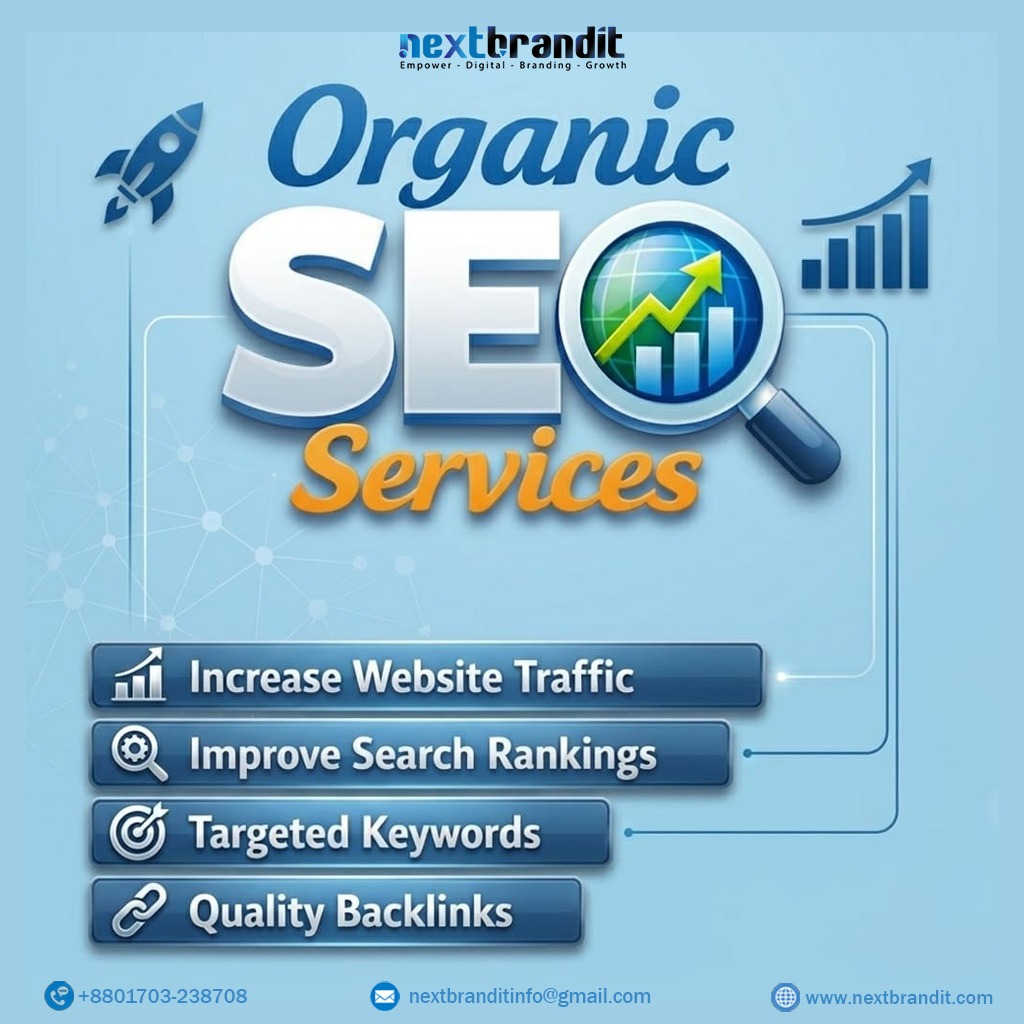
Affordable SEO services help businesses grow without spending too much money. Small businesses especially benefit from affordable SEO services for small business, making it easier to reach more customers online. These services include technical SEO audit services that check your website for problems. Organic SEO services improve your website’s natural ranking on search engines. Local SEO services near Nextbrandit help businesses attract nearby customers. The benefits of affordable SEO include better online presence, increased traffic, and more sales.
Affordable SEO services increase your website’s visibility on search engines. This means more people see your business when they search online. Better visibility leads to more visits and potential customers. Using organic SEO services helps your site rank higher naturally without paying for ads.
Affordable SEO is a smart choice for small businesses. It costs less than traditional marketing methods like print ads or TV commercials. With affordable SEO services for small business, you get more value for your money. The return on investment is often higher because online traffic can turn into real sales.
Technical SEO audit services fix website issues that slow down your site or confuse visitors. A faster, easier-to-use website keeps customers happy. Good user experience helps visitors find what they need quickly, increasing the chance they will buy from you.
Local SEO services near Nextbrandit help businesses connect with nearby customers. This type of SEO focuses on local searches, like “best coffee shop near me.” It drives targeted traffic to your store or website. Local SEO makes it easier for customers in your area to find and choose your business.
Affordable SEO builds a strong foundation for your business online. Unlike paid ads that stop when you stop paying, SEO results last longer. Organic SEO services help maintain your website’s ranking over time. This steady growth brings consistent traffic and sales.
| Benefit | Explanation |
| Improved Visibility | More people find your website on search engines. |
| Cost-Effective | Lower marketing costs with better returns. |
| Better User Experience | Faster, easier website keeps customers happy. |
| Targeted Local Traffic | Connect with customers near your business. |
| Long-Term Growth | SEO results last longer than paid ads. |
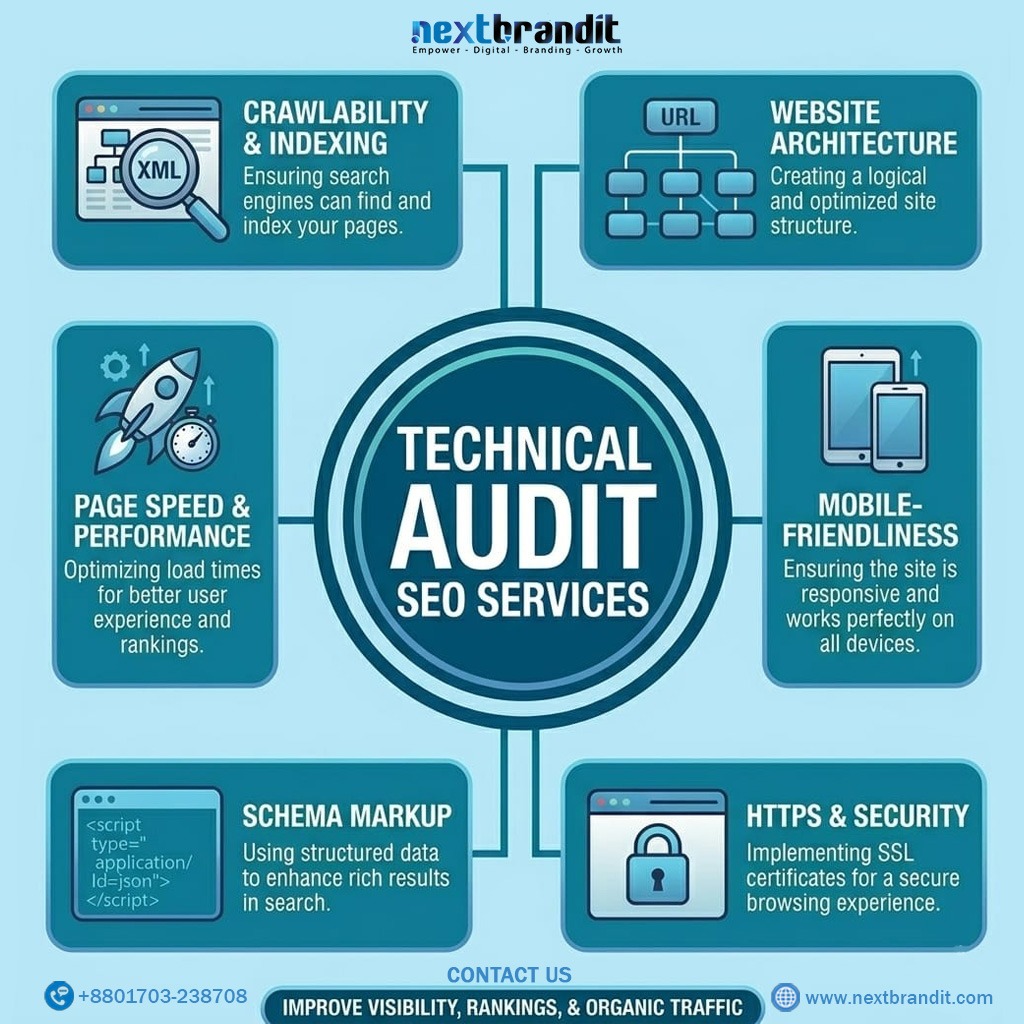
Affordable SEO services offer small businesses a way to improve their online presence without high costs. Understanding key SEO techniques helps businesses use these services effectively. These techniques include on-page optimization, link building, and content creation. Each plays a vital role in boosting website rankings and attracting organic traffic. Using affordable SEO services for small business ensures smart spending and better results. Below is a closer look at these essential SEO methods.
On-page optimization is the process of improving individual web pages to rank higher and earn more relevant traffic. It focuses on both the content and the HTML source code of a page. This technique is a foundation of affordable SEO services and includes several key elements:
Technical SEO audit services often include checks of on-page factors. They identify issues like broken links, slow loading speed, and duplicate content. Fixing these problems improves user experience and search rankings. Local SEO services near Nextbrandit also emphasize on-page optimization to target local customers effectively.
Link building involves getting other websites to link back to your site. These backlinks signal to search engines that your site is trustworthy and relevant. Affordable SEO services use smart link building techniques to grow your site’s authority.
Key tactics for link building include:
Quality matters more than quantity. Links from reputable sites carry more weight. Avoid spammy or irrelevant links as they can harm your rankings. Organic SEO services focus on building natural, high-quality backlinks. These links drive targeted traffic and improve your site’s credibility. Local SEO services near Nextbrandit also prioritize local link building to boost visibility in specific areas.
Content creation is central to affordable SEO services for small business growth. Good content attracts visitors, answers questions, and encourages engagement. Search engines favor websites that provide valuable and original information.
Effective content creation involves:
Content quality directly impacts SEO success. Affordable SEO services often combine content creation with on-page optimization and link building. Local SEO services near Nextbrandit emphasize creating content that targets local keywords and customer interests. This approach helps small businesses stand out in their communities and attract more local customers.
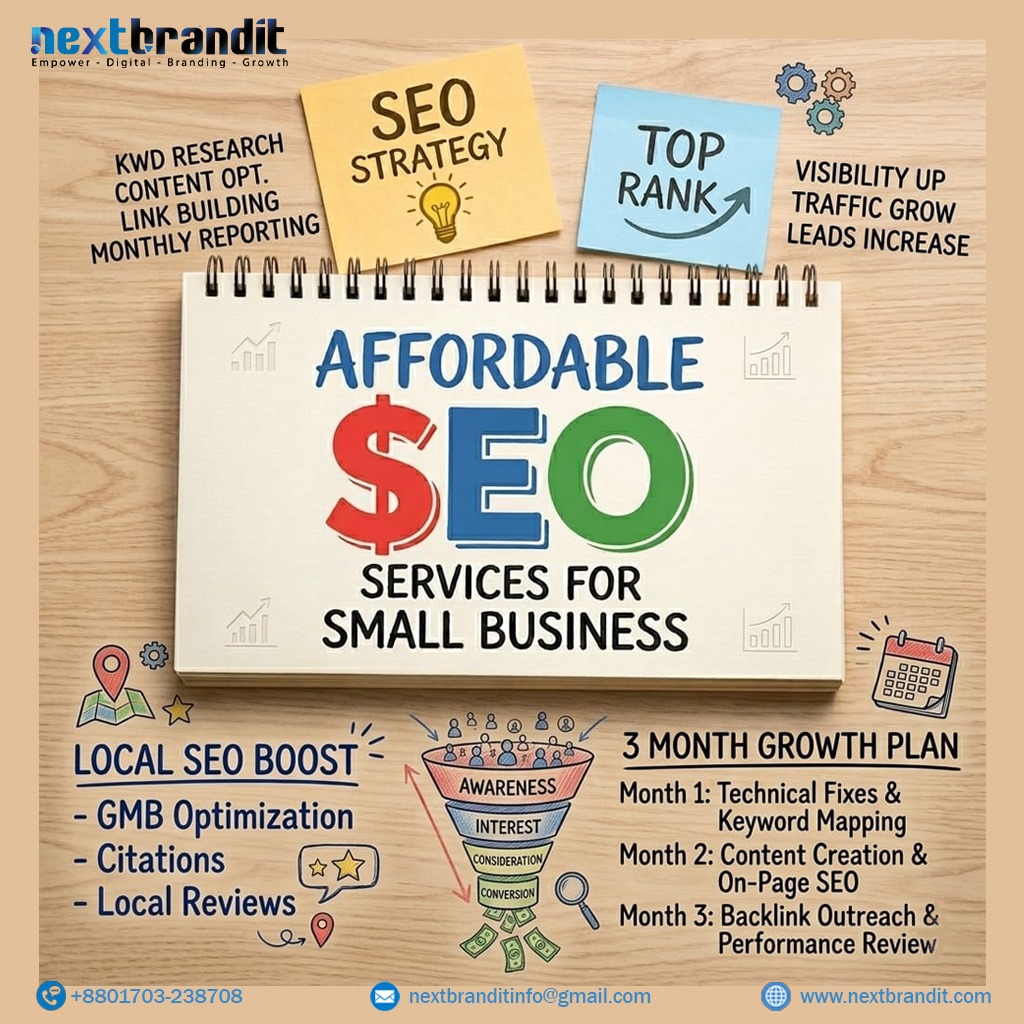
Choosing the right provider for affordable SEO services is crucial for your website’s success. The right team helps your site rank higher on search engines and attracts more visitors. Picking a provider without checking their skills and reputation can waste money and time. This section guides you through simple steps to find a reliable SEO partner. Focus on their experience and what other clients say about them.
Experience shows how well a provider understands SEO. A provider with many years in the field usually knows the best strategies to boost your website’s ranking. Look for these signs of strong experience:
Here is a simple table to compare experience levels:
| Experience Level | What to Expect | Best For |
| Less than 2 years | Basic SEO knowledge, limited track record | Small projects or testing services |
| 3 to 5 years | Good understanding, proven results | Most small to medium businesses |
| More than 5 years | Expertise in complex strategies, wide experience | Large projects or competitive markets |
Ask providers about their experience directly. A confident provider will explain their methods clearly.
Reviews reveal what past clients think about the SEO provider. They show if the provider is trustworthy and delivers results. Read reviews carefully and watch for common points. Here are tips for checking reviews:
Here is a checklist to evaluate reviews:
Remember, no provider has only perfect reviews. Look for honest patterns instead of one or two bad comments. This helps find a provider who works well and fits your needs.
Understanding the common pricing models helps businesses choose the right affordable SEO services. Pricing varies based on the scope and type of SEO work. Small businesses, especially, need clear options to fit their budgets. Many providers offer flexible plans to cover different needs, such as technical SEO audit services or organic SEO services. Local seo services near Nextbrandit also have pricing tailored to specific regions. Knowing the common pricing models makes decision-making easier and helps avoid unexpected costs.
Monthly packages are popular for affordable SEO services. They offer ongoing support and steady progress. Businesses pay a fixed fee every month for a set of services. This model suits small businesses that want continuous improvement and regular updates.
Typical services in monthly packages include:
These packages allow for easy budgeting. The SEO team can track progress and adjust strategies monthly. Here is a simple comparison table:
| Package | Price Range | Services Included |
| Basic | $300 – $500 | Keyword research, On-page SEO, Monthly reports |
| Standard | $600 – $1,000 | Content updates, Link building, Technical SEO audit services |
| Premium | $1,200+ | Full SEO strategy, Local seo services near Nextbrandit, Advanced reporting |
Monthly packages provide steady growth. They fit businesses seeking affordable SEO services for small business needs. Regular work ensures organic SEO services perform well over time.
Project-based fees apply to one-time or short-term SEO tasks. This model suits businesses needing specific help, like a technical SEO audit or a local SEO campaign. It avoids long-term contracts and focuses on clear goals.
Common projects include:
Project-based pricing depends on task complexity and duration. It offers flexibility and control over spending. Businesses pay once for the full project, with no recurring fees.
Example pricing for common projects:
| Project | Estimated Cost | Description |
| Technical SEO Audit | $400 – $1,000 | Complete website analysis and fixes |
| Local SEO Setup | $300 – $700 | Optimize for local search, including Google My Business |
| Content SEO | $250 – $600 | SEO-friendly article or blog creation |
Project-based fees suit businesses seeking affordable SEO services for small business projects. These services focus on quick wins and essential fixes. Organic SEO services benefit from well-planned projects, improving search rankings fast.
Affordable SEO services offer small businesses a chance to improve their online presence without breaking the bank. Choosing the right provider can lead to better website traffic and higher search rankings. Yet, the market has many SEO scams that promise quick results but deliver little. Avoiding SEO scams is crucial to protect your investment and ensure long-term success. Recognizing warning signs and asking the right questions helps find trusted affordable SEO services for small business owners.
Many scams in SEO target businesses seeking affordable SEO services. These scams often use unrealistic promises and shady techniques that harm your website. Watch for these common red flags to avoid losing money and damaging your online reputation:
Here is a quick comparison table of common signs between legitimate services and scams:
| Aspect | Legitimate SEO Services | SEO Scams |
| Pricing | Clear, fair, based on services | Very cheap or vague pricing |
| Methods | White-hat, ethical SEO tactics | Black-hat, risky shortcuts |
| Results | Gradual and steady improvements | Immediate, unrealistic promises |
| Communication | Regular updates and reports | Poor or no communication |
Technical SEO audit services are essential in identifying real issues rather than using quick fixes. Always ensure the service provider offers a detailed audit before making decisions.
Asking the right questions helps to find affordable SEO services for small business that deliver real value. Use these questions to check the provider’s knowledge and transparency:
Here is a checklist to keep in mind during discussions:
Use these questions to filter out offers that seem suspicious or too good to be true. Affordable SEO services work best with honest providers who focus on ethical, effective strategies.
Maximizing your SEO budget is essential for businesses that want to get the best results without overspending. Affordable SEO services can help small businesses compete online by focusing on smart, effective tactics. Spending wisely on SEO means choosing the right strategies and measuring results carefully. This approach ensures that every dollar contributes to better search rankings, more traffic, and higher sales. Affordable SEO services for small business owners often include key options like technical SEO audit services and organic SEO services. Local SEO services near Nextbrandit also offer targeted help for businesses aiming to reach local customers. Planning and tracking your SEO budget well brings better value and long-term success.
Choosing the right SEO strategies is the first step to maximize your budget. Not all SEO tactics cost the same or bring equal results. Prioritize those that fit your business goals and offer the highest return.
Use this table to compare common SEO strategies by cost and impact:
| SEO Strategy | Approximate Cost | Impact on Rankings | Best For |
| Technical SEO Audit | Moderate | High | Site Health |
| Organic SEO (Content & Links) | Low to Moderate | High | Long-Term Growth |
| Local SEO | Low | Moderate | Local Customers |
Prioritize strategies that fix technical issues first. Next, create quality content and build local presence. This order prevents wasted spending and builds momentum.
Tracking the return on investment (ROI) is key to using affordable SEO services well. Without tracking, you may spend money without knowing which actions help your business.
Start by setting clear goals, such as increasing website visits, leads, or sales. Use tools like Google Analytics to measure traffic and user behavior. Track keyword rankings to see organic SEO services’ impact. For local businesses, monitor calls and visits from local SEO services near Nextbrandit.
ROI = (Gain from SEO – Cost of SEO) / Cost of SEO
Regularly review this data to adjust your budget and strategies. Stop spending on tactics that do not bring results. Focus on affordable SEO services that drive measurable growth. This careful tracking saves money and improves outcomes.
Affordable SEO services help businesses improve website ranking without high costs. They focus on key strategies like keyword research and content optimization. These services suit small businesses with limited budgets.
They use techniques such as on-page SEO, link building, and local SEO. These methods increase website visibility on search engines. More visibility means more visitors and potential customers.
Yes, affordable SEO services help small businesses compete with larger companies. They provide tailored strategies that fit small budgets. This helps small businesses grow online effectively.
Expect keyword research, content creation, and basic link building. Some packages include website audits and monthly reports. These features ensure steady improvement and clear results.
SEO results usually appear within 3 to 6 months. It depends on competition and current website status. Patience and consistent effort are key for success.
Affordable SEO can work for most industries with online presence. Strategies are customized to target specific markets and audiences. This ensures relevant traffic and better engagement.
Affordable SEO services help small businesses grow online without high costs. They improve website traffic and increase visibility on search engines. Choosing the right service saves money and brings steady results. Simple, clear strategies work best for long-term success. Investing in affordable SEO means better chances to reach new customers.
Start small, track progress, and adjust your plan as needed. Quality SEO does not have to be expensive to be effective.
Are you struggling to get your YouTube videos noticed? You put time and effort into creating great content, but the views just don’t add up.
That’s where YouTube Video SEO comes in. By optimizing your videos the right way, you can make sure they reach the people who really want to watch them. Imagine your videos showing up at the top of search results and attracting more views, likes, and subscribers—all without spending extra money on ads.
Keep reading, and you’ll discover simple, effective tips to boost your video rankings and grow your channel faster than you thought possible.
Keyword research plays a vital role in youtube video seo. It helps creators find the right words to include in titles, descriptions, and tags. Using the best keywords improves video visibility and attracts more viewers. Without proper keyword research, videos may get lost in the vast YouTube library. Effective keyword research supports a strong youtube seo strategy, making it easier to optimize youtube videos for seo and boost rankings. Understanding what viewers search for guides content creation and seo optimization for youtube videos.
Start by identifying keywords that are popular and relevant to your video topic. High-impact keywords have good search volume but lower competition. These keywords increase the chance of your video ranking higher on YouTube. Follow these steps to find effective keywords:
Here is an example of keyword types:
| Keyword Type | Example | Search Intent |
| Short-tail | Cooking | Broad |
| Long-tail | Easy cooking recipes for beginners | Specific |
Use a mix of these keywords in your titles and descriptions. This approach aligns with youtube ranking tips and helps your content reach the right viewers.
Keyword tools simplify the research process and provide valuable data. They show search volume, competition level, and related keywords. Free and paid tools can help find the best keywords for seo optimization for youtube videos. Popular options include:
Use these tools to:
Example of keyword data from a tool:
| Keyword | Search Volume | Competition | SEO Score |
| how to bake a cake | 15,000 | Medium | 75/100 |
| easy cake recipes | 8,000 | Low | 85/100 |
Use the highest scoring keywords to optimize youtube videos for seo and improve discoverability.
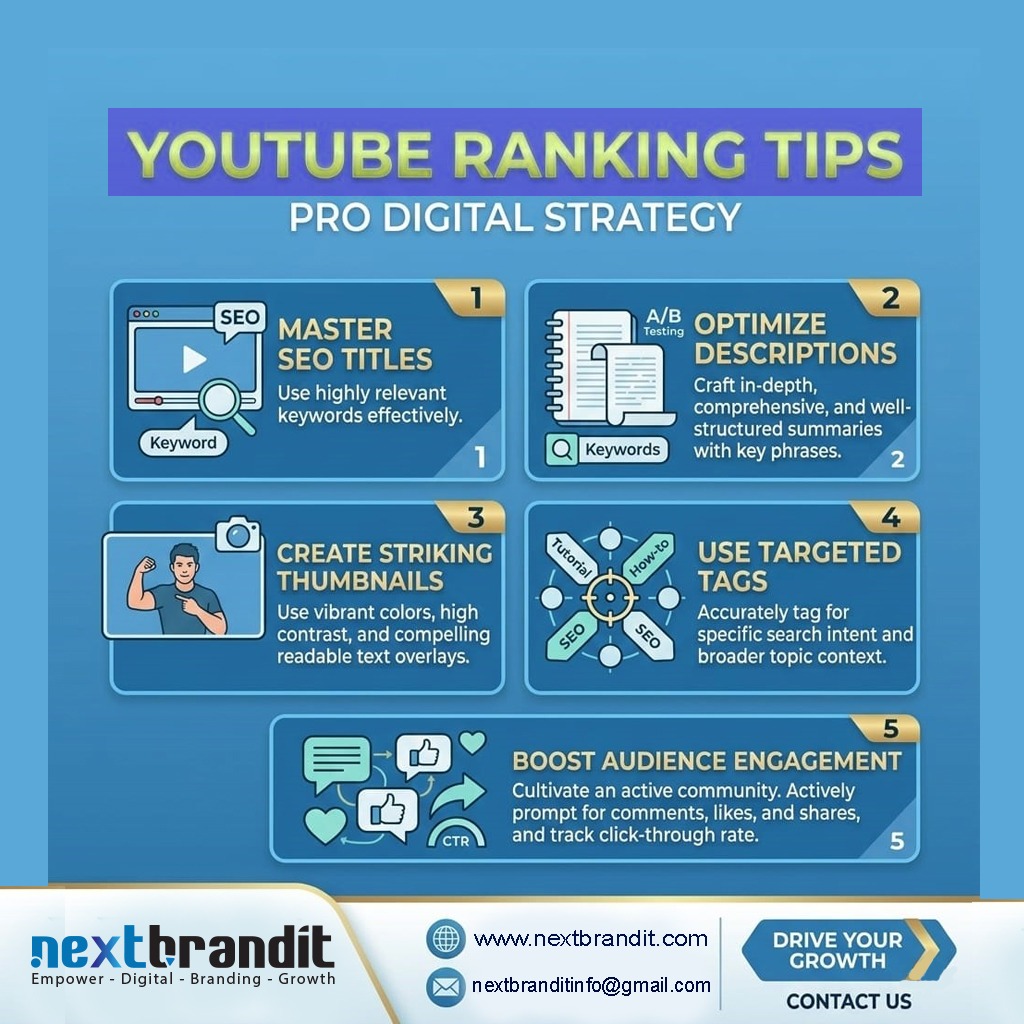
Studying competitor keywords reveals what works in your niche. It uncovers the keywords other creators use to rank well. This insight supports your youtube seo strategy by showing gaps and opportunities. To analyze competitor keywords:
Example process for competitor keyword analysis:
This method helps refine your keyword list and improves your chance to rank. You apply youtube ranking tips by using proven keywords and finding new ones. It keeps your content competitive and visible.
Optimizing video titles is a crucial step in youtube video seo. Titles are the first thing viewers see and play a big role in video clicks. A good title can improve your youtube ranking and attract more viewers. It helps YouTube understand your video content and match it with search queries. Crafting clear and appealing titles is part of any solid youtube seo strategy. This section explains how to create strong titles and use keywords smartly to optimize youtube videos for seo.
Good titles grab attention and make people want to watch your video. An engaging title is short, clear, and interesting. Avoid long or confusing titles. Instead, focus on what your video offers. Use action words or questions to spark curiosity. For example:
Keep titles under 60 characters to avoid being cut off in search results. Strong titles also match the video’s content to keep viewers happy. Misleading titles can hurt your channel’s reputation and lower your ranking.
Here is a quick checklist for engaging titles:
| Tip | Reason |
| Use simple language | Makes it easy to understand |
| Include numbers or lists | Attracts more clicks |
| Ask a question | Creates curiosity |
| Be honest about content | Builds trust with viewers |
Using the right keywords in your title is key for seo optimization for youtube videos. Keywords help YouTube understand your content and improve your video’s visibility. Start by researching terms people use to find videos like yours. Use tools like YouTube’s search bar suggestions or keyword planners.
Place your main keyword near the beginning of the title. This placement has more impact on youtube ranking tips. Avoid keyword stuffing, which means overloading the title with keywords. It looks spammy and can harm your SEO.
Here are steps to add keywords effectively:
Example titles using keywords:
Following these tips helps your video appear in search results and recommended videos. This boosts views and grows your channel as part of a strong youtube seo strategy.

Creating effective descriptions is a key part of youtube video seo. Descriptions help viewers and search engines understand your video content. A well-written description improves your youtube ranking and makes your video easier to find. It also gives viewers a clear idea of what to expect, increasing watch time and engagement. Using the right words and structure supports your seo optimization for youtube videos and strengthens your youtube seo strategy. Below, find tips on crafting detailed descriptions and using links and timestamps.
Writing a detailed description helps optimize youtube videos for seo. Start with a clear summary of your video content in the first 1-2 sentences. This part appears in search results, so use important keywords naturally.
Include relevant keywords related to your topic without stuffing. Keep sentences short and simple for easy reading. Use bullet points to highlight key information or steps discussed in your video.
Use about 150-300 words to give enough context. Avoid vague phrases. Instead, be specific and informative. Below is a simple example table for a cooking video description:
| Section | Content Example |
| Introduction | Learn how to make easy chocolate chip cookies in 30 minutes. |
| Ingredients | Flour, sugar, butter, chocolate chips, eggs, baking soda. |
| Steps | Mix ingredients, bake at 350°F for 12 minutes, cool before serving. |
| Call to Action | Subscribe for more baking recipes and tips! |
A detailed description helps search engines match your video to viewer searches. It also builds trust and interest with viewers. Clear and complete descriptions support your youtube seo strategy and improve your video’s visibility.
Including links and timestamps in your video description boosts youtube video seo and viewer engagement. Links guide viewers to related content or resources. Timestamps help users jump to specific parts of your video.
Links can include:
Use full URLs or shortened links that are easy to copy. Label each link clearly so viewers know what to expect.
Timestamps improve user experience by letting viewers find important sections quickly. Format timestamps like this:
00:00 Introduction 01:15 Main topic explanation 03:45 Tips and tricks 07:00 Summary and call to action
Well-organized timestamps also help search engines understand your video content better. This can improve youtube ranking and make your video appear as a rich snippet in search results.
Here is a quick checklist for adding links and timestamps:
These steps complement seo optimization for youtube videos and help you optimize youtube videos for seo effectively.
Tags play an important role in youtube video seo. They help YouTube understand the content and context of your videos. Good tagging strategies improve youtube ranking tips by making videos easier to find. Proper tags connect your video to similar content, increasing chances of appearing in search results or recommended lists. Using smart tags is part of an effective youtube seo strategy. It supports seo optimization for youtube videos without overloading or misleading viewers. Below are key points about tagging that help optimize youtube videos for seo.
Choosing the right tags is the first step to good youtube video seo. Tags should clearly describe your video’s main topics and themes. Use words and phrases your audience might type when searching. This helps YouTube match your video to relevant searches and related videos.
Keep these tips in mind when selecting tags:
| Type of Tag | Example | Purpose |
| Specific Keywords | “how to bake chocolate cake” | Targets exact search queries |
| Broad Keywords | “baking”, “desserts” | Connects to wider topic groups |
| Related Terms | “easy cake recipe”, “chocolate frosting” | Expands reach to similar interests |
Using relevant tags helps YouTube’s algorithm understand your video better. This increases visibility and supports your youtube seo strategy.
Over-tagging can harm your seo optimization for youtube videos. Adding too many tags or unrelated keywords confuses YouTube. It can lower your video’s rank or even cause penalties.
Keep tagging simple and focused. Here are some key points to avoid over-tagging:
Here is a quick comparison of good vs. bad tagging:
| Good Tagging | Bad Tagging |
| Relevant, clear tags | Too many unrelated tags |
| 10-15 focused tags | 50+ tags, spammy keywords |
| Tags match video content | Tags misleading viewers |
Following these rules ensures your tags help optimize youtube videos for seo. It improves your chances of ranking well and gaining more views.
Thumbnails play a crucial role in youtube video seo. They act as the first impression and can decide whether a viewer clicks on your video or not. Following best practices for thumbnails helps improve youtube ranking tips by increasing click-through rates. A well-designed thumbnail supports your seo optimization for youtube videos and forms an important part of your overall youtube seo strategy. This section covers how to create thumbnails that attract viewers and maintain a consistent brand look to optimize youtube videos for seo.
Creating thumbnails that grab attention is essential for boosting video visibility. Thumbnails should be clear, colorful, and relevant. Use high-contrast colors to make your image stand out in search results and suggested videos. Bold text on thumbnails works well to communicate the video’s topic fast.
Here is a simple table showing good and bad thumbnail examples:
| Good Thumbnail | Bad Thumbnail |
| Clear subject, bright colors, readable text | Blurry image, dull colors, too much text |
| Emotion or face visible | No clear focus or subject |
| Simple and clean design | Cluttered with many objects |
Consistent thumbnails help viewers recognize your videos easily. Branding ties your content together and builds trust. Use similar colors, fonts, and styles across all thumbnails. This consistency supports your youtube seo strategy by making your channel look professional and reliable.
Consider these points for branding consistency:
Consistent thumbnails improve channel identity and encourage viewers to click more videos. This helps optimize youtube videos for seo by increasing watch time and engagement. Branding consistency is a key youtube ranking tips element that works alongside other seo optimization for youtube videos methods.
Engagement Boosting Techniques are key to improving your youtube video seo. These techniques help your videos attract more viewers and keep them watching longer. Higher engagement signals YouTube that your content is valuable. This can improve your youtube ranking and bring more traffic to your channel. Focusing on boosting comments, likes, and watch time is essential for a strong youtube seo strategy. Below are two effective methods to increase engagement and optimize your videos for better results.
Comments and likes show YouTube that viewers enjoy your video. This helps seo optimization for youtube videos by increasing interaction rates. To encourage comments and likes, try these simple steps:
Engagement grows when viewers feel involved. The table below shows how these actions impact youtube video seo:
| Action | Effect on SEO | Example |
| Asking questions | Increases comments | “What do you think about this tip?” |
| Inviting feedback | Boosts viewer interaction | “Share your favorite tool below.” |
| Replying to comments | Builds community, more comments | “Thanks for your input!” |
| Call-to-actions | Raises likes and subscribers | “Like if you found this helpful.” |
Consistent interaction helps maintain viewer interest. This improves your youtube ranking tips and overall channel growth. Engaged viewers are more likely to watch your next videos, improving your SEO.
Organizing videos into playlists helps viewers find related content easily. Playlists keep people watching longer, which is great for optimize youtube videos for seo. End screens guide viewers to your next video, increasing session time.
Use these tips for better engagement:
Playlists and end screens work together to increase watch time and clicks. This signals YouTube that your content is valuable, boosting your youtube seo strategy.
The table below highlights key benefits:
| Feature | Benefit | SEO Impact |
| Playlists | Organize videos, encourage binge-watching | Higher watch time, better ranking |
| End Screens | Promote other videos, increase clicks | More session duration, improved SEO |
Use playlists and end screens to guide viewers smoothly through your content. This is a strong youtube seo strategy to boost engagement and improve your channel’s visibility.
YouTube Video SEO helps videos rank higher in search results. It increases views and attracts the right audience. Good SEO makes your video easier to find.
Keywords tell YouTube what your video is about. Using relevant keywords in titles and descriptions helps your video appear in searches. It guides YouTube to match videos with viewers’ queries.
Use clear, simple titles with main keywords near the start. Titles should describe the video content accurately. Avoid clickbait to keep viewers’ trust.
Descriptions provide context and keywords for YouTube’s algorithm. A detailed description helps videos rank in related searches. It also informs viewers about the video content.
Tags help YouTube understand your video’s topics and category. Use a mix of broad and specific tags related to your content. Proper tags increase the chances of your video appearing in suggested videos.
Thumbnails attract clicks and improve video engagement. Clear, bright, and relevant thumbnails increase viewer interest. Higher engagement signals YouTube to rank your video better.
YouTube video SEO helps your videos reach more viewers. Use clear titles and good descriptions. Add relevant tags to guide search engines. Create engaging content that keeps people watching. Consistent uploads build your channel’s strength. Check your analytics to see what works best.
Small changes can make a big difference over time. Keep learning and adjusting your strategy. Your videos will grow in views and subscribers. Simple steps lead to better video success.