
If you’ve ever typed “local seo vs international seo” into Google trying to figure out which one your business actually needs, you’re not alone. It’s one of the most common questions business owners ask when they start taking search visibility seriously — and honestly, it’s a fair question. The two approaches share the same end goal (getting found on Google), but the strategies, tools, and even the mindset behind them are quite different.
Maybe you run a single-location dental clinic in Manchester. Or maybe you’re scaling an e-commerce brand that ships to the US, UK, Canada, and Australia all at once. Either way, picking the wrong SEO approach can waste months of effort and budget chasing rankings that don’t actually move your business forward.
In this guide, we’ll break down what local SEO and international SEO actually mean, how they differ, and — most importantly — how to figure out which one (or both) your business needs right now. By the end, you’ll have a clear picture, plus practical checklists you can start using today.
What Is Local SEO?
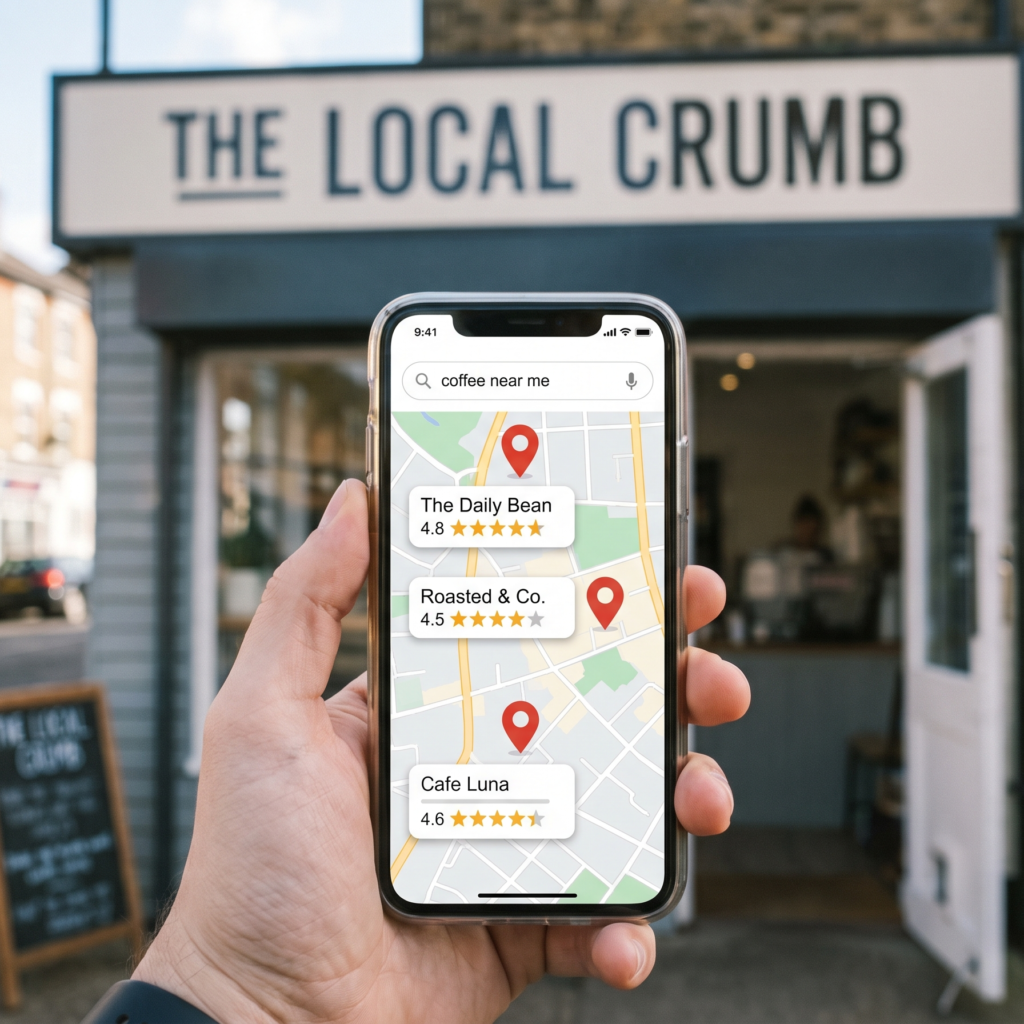
Local SEO is the practice of optimizing your online presence so your business shows up when people search for products or services near a specific location — usually a city, town, or region. Think “plumber near me,” “best coffee shop in Leeds,” or “dentist in Toronto.” Google uses signals like your business address, customer reviews, and local citations to decide who deserves to show up in that map pack and those local results.
Unlike broader SEO efforts, local SEO isn’t really about competing on a national or global scale. It’s about being the obvious, trusted choice for people who are physically close to you or who need a service delivered in your area.
Who Needs Local SEO?
Local SEO is essential for any business that depends on foot traffic or serves customers within a defined geographic area. Some clear examples include:
- Restaurants and cafés that rely on nearby diners finding them
- Medical clinics and dental practices where patients search for care close to home
- Plumbers, electricians, and other home service providers who only work within a certain radius
- Retail stores with a physical storefront
- Law firms, salons, gyms, and real estate agents who serve a specific city or metro area
Basically, if a customer needs to physically visit you, or you need to physically go to them, local SEO should be at the center of your strategy.
What Is International SEO?
International SEO, on the other hand, is about making your website visible and relevant to audiences across multiple countries or language markets. It’s not just about ranking — it’s about making sure Google understands which version of your site to show to which audience, and that your content actually resonates with each market’s language, currency, and search habits.
This involves technical elements like hreflang tags, country-specific URL structures, and localized content — plus a strategic approach to keyword research that accounts for how people search differently across regions, even when they’re speaking the same language.
Who Needs International SEO?
International SEO becomes necessary once your business operations, sales, or audience cross national borders. Common examples include:
- E-commerce brands shipping products to multiple countries
- SaaS companies with customers signing up from all over the world
- B2B service providers pitching to clients in different regions
- Franchises or agencies with offices or partners in multiple countries
- Content publishers targeting readers in different English-speaking (or multilingual) markets
If your growth plan involves reaching customers outside your home country, international SEO isn’t optional — it’s the foundation that makes that expansion actually work in search.
Local SEO vs Global SEO: Core Differences
When people compare local seo vs global seo, the confusion usually comes from thinking they’re just “smaller” and “bigger” versions of the same thing. In reality, they solve different problems and require different toolkits entirely.
Local SEO is built around proximity and trust signals within one market. Global (international) SEO is built around technical infrastructure and content strategy that scales across markets. One is about depth in a single location; the other is about breadth across many.
Key Differences at a Glance
| Factor | Local SEO | International SEO |
| Targeting Scope | Single city, region, or metro area | Multiple countries or language markets |
| Technical Setup | Google Business Profile, local schema markup | Hreflang tags, ccTLD/subdirectory structure, geotargeting in Search Console |
| Content Strategy | Location-specific pages, local keywords | Country-specific content, currency & language localization |
| Link Building | Local citations, local news, community partnerships | Region-based backlinks, international PR, market-specific outreach |
| Cost | Generally lower — narrower scope | Higher — more markets, more content, more technical work |
| Timeline to Results | Often faster (weeks to a few months) | Longer (several months per market, sometimes longer) |
The takeaway: local SEO tends to be more contained and quicker to show movement, while international SEO is a bigger, longer-term investment that pays off through wider market reach.
Building a Local SEO Strategy
A strong local seo strategy is built on a handful of core pillars that work together to build trust with both Google and local customers.
Core Elements of an Effective Local SEO Strategy
Google Business Profile Optimization Your Google Business Profile (formerly Google My Business) is arguably the single most important local ranking factor. Complete every field — categories, hours, services, photos — and keep it updated. An incomplete or outdated profile signals low trust to both Google and potential customers.
Local Citations Citations are mentions of your business name, address, and phone number (NAP) across directories like Yelp, Yellow Pages, and industry-specific listings. Consistency across all of these builds credibility and helps Google confirm your business is legitimate and active.
Location-Based Keywords Instead of just targeting broad terms like “accountant,” local businesses need to target phrases like “small business accountant in Bristol” or “tax advisor near [neighborhood].” These location-modified keywords match how people actually search when they want something nearby.
Reviews Management Customer reviews influence both rankings and conversion rates. Actively encouraging reviews — and responding to them, positive or negative — shows Google (and future customers) that your business is engaged and trustworthy.
Together, these elements create a local footprint that’s hard for competitors to outrank, especially when maintained consistently over time.
Local SEO Checklist
If you want a practical starting point, here’s a local seo checklist you can work through step by step:
- Set up and fully complete your Google Business Profile — categories, hours, photos, description, and services
- Ensure NAP consistency (Name, Address, Phone) across your website and every directory listing
- Do local keyword research — identify city, neighborhood, and “near me” search terms relevant to your services
- Create city or region-specific landing pages if you serve multiple areas, each with unique, locally relevant content
- Build local backlinks and citations through local business associations, chambers of commerce, and community sponsorships
- Develop a customer review strategy — ask satisfied customers for reviews and respond promptly to all feedback
- Add local business schema markup to your website so search engines can clearly read your location data
- Monitor local rankings using rank-tracking tools focused on your target city or region
Working through this checklist consistently — not just once — is what separates businesses that dominate local search from those that plateau after initial setup.
International SEO Checklist
For businesses expanding across borders, here’s an international seo checklist to guide the technical and strategic setup:
- Set up hreflang tags correctly so Google serves the right language/country version of your pages to the right audience
- Conduct international keyword research per country — search behavior and terminology often differ even between English-speaking markets (e.g., “trainers” in the UK vs. “sneakers” in the US)
- Decide on your URL structure — ccTLD (.co.uk, .ca), subdirectory (/uk/, /ca/), or subdomain (uk.example.com), each with different SEO and maintenance trade-offs
- Create country-specific content rather than simply translating — pricing, currency, cultural references, and examples should reflect each market
- Build region-based backlinks from local publications, directories, and partners within each target country
- Set up per-country performance reporting in Google Search Console and analytics tools to track rankings and traffic by market separately
- Localize technical elements like currency, date formats, shipping information, and legal/compliance content per country
- Test site speed and hosting performance for users in each target region, using CDNs where necessary
Skipping the technical foundation — especially hreflang and URL structure — is the most common reason international SEO campaigns underperform, even when the content itself is solid.

Country-Specific Considerations
SEO isn’t one-size-fits-all, even within what looks like a single “market.” Here’s how local vs international SEO plays out differently across four key regions.
Local vs International SEO for US Businesses
The US is large enough that “local” often means state or even city-specific targeting rather than treating the whole country as one market. A business operating in multiple states can face challenges that resemble international SEO — different competitors, different search behavior, and sometimes different regulations — even though it’s technically one country.
Local vs International SEO for UK Businesses
Being a smaller, more geographically compact country makes local SEO relatively straightforward for UK businesses. However, once a business looks to expand into the EU or Ireland, it starts needing international SEO practices — different currencies, VAT considerations, and language nuances come into play even with English-speaking neighbors like Ireland.
Local vs International SEO for Canadian Businesses
Canada adds a unique layer: bilingual considerations. Serving English and French-speaking audiences within the same country requires a strategy that’s closer to “mini-international” SEO — separate content, careful hreflang setup between en-CA and fr-CA, and distinct keyword research for each language segment.
Local vs International SEO for Australian Businesses
Australia’s vast geography paired with lower population density means city-based local SEO remains a strong strategy for most businesses — Sydney, Melbourne, and Brisbane function almost like separate markets. But businesses looking to expand into New Zealand will need to start applying international SEO principles, despite the geographic and cultural closeness.
Can You Do Both at the Same Time?
Yes — and for many growing businesses, a hybrid approach is exactly the right move. A business might maintain strong local SEO for its physical stores or service areas in the US while simultaneously building out international SEO to support expansion into the UK or Canada.
The key is not treating these as competing priorities, but as complementary layers of the same overall visibility strategy. Local SEO protects and strengthens your home turf, while international SEO opens doors to new markets — and done well, they can even reinforce each other through shared brand authority and cross-market backlinks.
At Next Brand IT, we regularly manage both sides of this equation for clients — running focused local campaigns for physical locations while building out the technical and content infrastructure needed for international growth, all under one coordinated strategy rather than two disconnected efforts.
How to Decide Which One Your Business Needs
If you’re still unsure, here’s a simple framework to help you decide:
- Do you have a physical location that customers visit, or do you serve a defined local area? → You need Local SEO
- Do you ship products or offer services to customers in multiple countries? → You need International SEO
- Both of the above apply to you? → You need a Hybrid Strategy that combines local depth with international reach
This isn’t always a permanent decision, either. Many businesses start local and grow into international SEO as they expand — the important thing is recognizing where you are right now so you’re not investing in the wrong strategy too early, or missing the moment when it’s time to expand.
Why Choose Next Brand IT
Whether your business needs sharp local visibility, a full international SEO rollout, or both running side by side, Next Brand IT builds strategies around where your business actually is — not a generic template. We offer flexible packages for local businesses just getting serious about search, as well as comprehensive international SEO services for companies ready to scale across the US, UK, Canada, Australia, and beyond.
Not Sure Which One You Need? Get a Free SEO Consultation — our team will assess your current setup and recommend the right path forward, with no pressure and no guesswork.
Frequently Asked Questions
What is the difference between local SEO and international SEO?
Local SEO focuses on ranking within a specific city or region, relying on signals like Google Business Profile and local citations. International SEO focuses on ranking across multiple countries, relying on technical setup like hreflang tags and country-specific content.
Do I need local SEO or international SEO for my business?
It depends on how you serve customers. If you rely on a physical location or serve a specific area, local SEO is essential. If you sell to or serve customers in multiple countries, international SEO is the priority.
Can a business use both local and international SEO together?
Yes. Many businesses run a hybrid strategy — maintaining strong local visibility in their home market while building out international SEO for expansion into new countries.
Which is more expensive: local SEO or international SEO?
International SEO generally requires a larger investment due to the added technical work, multi-market content creation, and region-specific link building involved. Local SEO tends to be more affordable since it targets a single area.
How do I know if my business is ready for international SEO?
Signs of readiness include existing demand from international customers, plans to ship or operate in new countries, and the resources to create localized content and manage multi-region technical SEO.
Is local SEO enough for a small business?
For most small businesses serving a single city or region, yes — a strong local SEO strategy is often enough to drive consistent, qualified traffic without the added complexity of international SEO.
Conclusion
At the end of the day, the local seo vs international seo decision comes down to one question: where do your actual customers come from? If they’re walking through your door or calling from across town, local SEO deserves your full attention. If they’re spread across the US, UK, Canada, and Australia, international SEO is what will actually move the needle.
And if you’re somewhere in between — growing locally while eyeing new markets — a hybrid strategy lets you build both at once, without one holding back the other.
Not sure which path fits your business best? Reach out to Next Brand IT for a free SEO consultation, and we’ll help you map out a strategy that matches exactly where your business is today — and where you want it to go next.